
Blog
What to Expect During an Artificial Turf Installation in DFW
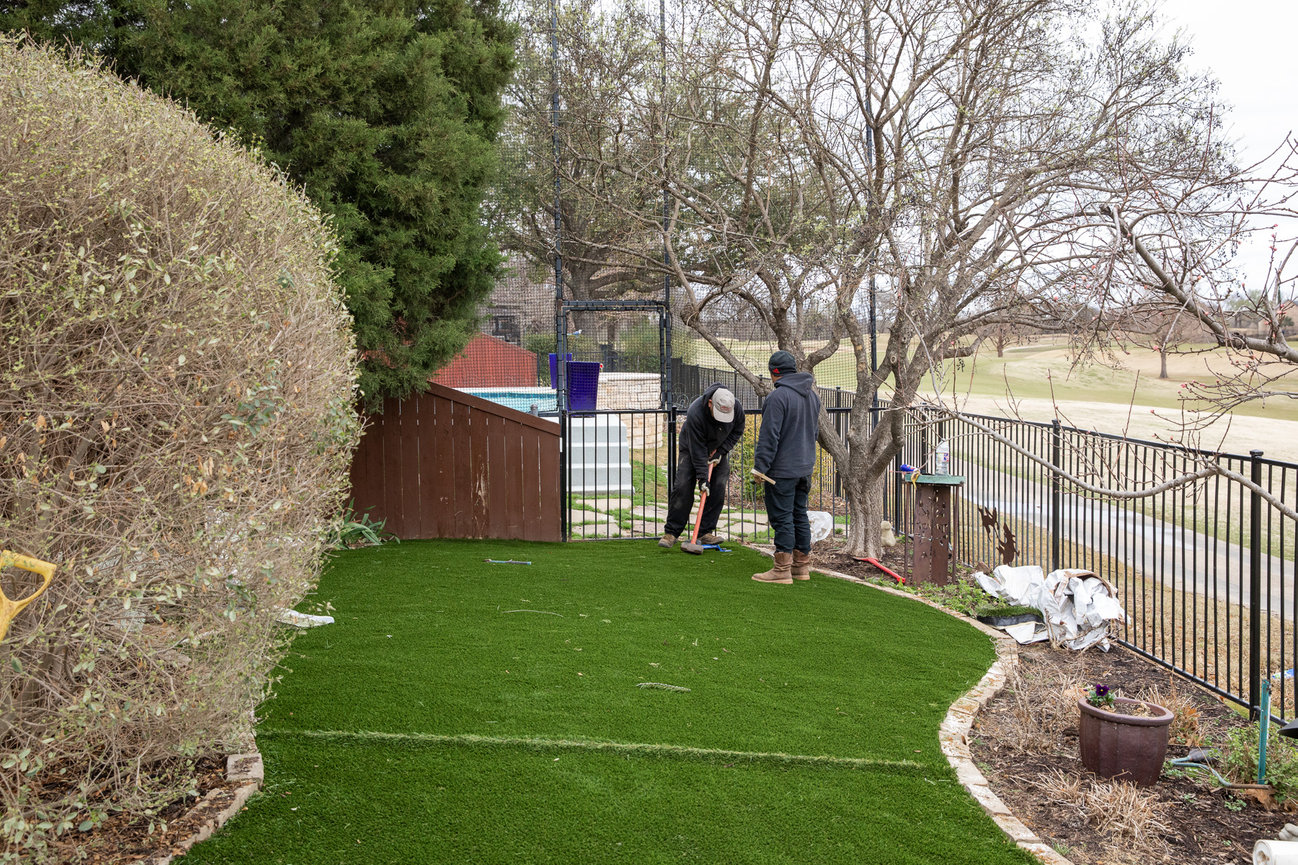
Understanding what goes into a professional artificial turf installation helps set realistic expectations for the process and highlights why quality installation makes such a significant difference in how the finished turf looks and performs over time.
Step One: Site Assessment and Preparation
The process begins with an assessment of the area, including drainage patterns, existing grass or landscaping that needs to be removed, and any grading adjustments necessary before installation can begin.
Step Two: Removing Existing Grass and Debris
Existing turf, roots, and debris are cleared from the installation area down to bare soil, ensuring a clean, stable surface for the base material that follows.
Step Three: Base Preparation
A compacted aggregate base is installed and properly graded, typically several inches deep depending on the application. This base is one of the most critical steps in the entire process, providing both stability and drainage for the turf above it.
Step Four: Weed Barrier Installation
A weed barrier fabric is often installed over the compacted base to prevent weed growth from beneath the turf, an important step for long-term appearance and maintenance.
Step Five: Turf Placement and Seaming
The artificial turf is rolled out, cut to fit the specific dimensions of the space, and seamed together where multiple pieces meet. Clean, well-executed seaming is what separates a professional installation from one with visible, unsightly seams.
Step Six: Securing the Edges
Turf edges are secured using landscape staples, adhesive, or a combination of methods depending on the specific application, ensuring the turf stays firmly in place even under regular foot traffic.
Step Seven: Infill Application
Infill material is spread across the turf and worked down into the fibers, which helps the blades stand upright, adds weight to keep the turf in place, and in some products, assists with drainage and odor control.
Step Eight: Final Grooming and Inspection
The turf is brushed and groomed to give it a natural, upright appearance, and the finished installation is inspected for consistent seaming, secure edges, and proper drainage before the project is considered complete.
Why Each Step Matters
Skipping or rushing any of these steps — particularly base preparation and drainage — is one of the most common reasons artificial turf installations fail prematurely, developing uneven surfaces, poor drainage, or visible seams over time.
Setting Realistic Expectations for Timeline
Depending on the size and complexity of the area, professional turf installation typically takes anywhere from a few days to a couple of weeks, factoring in site preparation, base work, and finishing details.

Curious what the process would look like for your specific property? Reach out through our contact page to schedule an assessment and get a clear installation timeline.